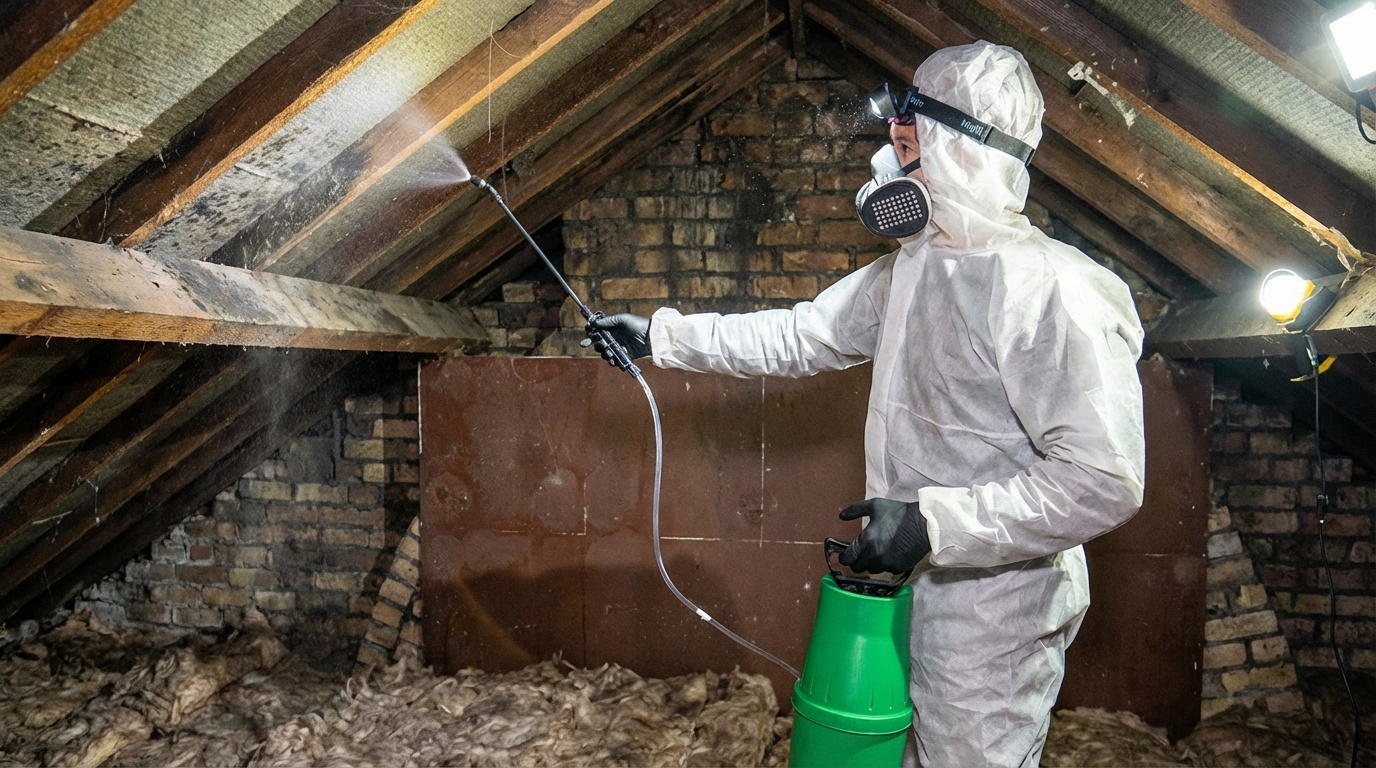
What is Loft Mould Treatment?
Loft mould treatment is the process of safely removing mould growth from roof timbers, felt, and loft surfaces β and more importantly, addressing the conditions that caused it in the first place.
In most Swansea homes, loft mould is caused by warm, moisture-laden air rising from the living space and condensing on cold surfaces in the loft. If ventilation is restricted or insulation is installed incorrectly, condensation builds up and mould can form on timbers and roof felt.
Our approach is ventilation-first: we treat the mould you can see, then help reduce the risk of it returning by improving airflow and identifying moisture sources.
Signs You May Have Loft Mould
-
π€ Black or white spots on timbers
Mould growth commonly appears as spotting or staining on rafters, joists, and roof felt.
-
π§ Condensation or damp smell
If your loft smells musty or you notice water droplets on felt, condensation is likely the root cause.
-
π¬ Poor airflow
Blocked eaves, missing vents, or insulation pushed into the eaves can trap moisture and cause mould.
-
πͺ΅ Timber discolouration
Persistent damp can stain wood and, if left long enough, contribute to timber deterioration.
Why Loft Mould Happens
Mould needs moisture to grow. In lofts, moisture is usually caused by condensation rather than roof leaks.
Warm air from kitchens, bathrooms and daily living rises into the loft through small gaps around loft hatches, downlights, pipework and wiring. If that warm air meets cold roof surfaces and ventilation is limited, it condenses into water β creating the ideal conditions for mould.
During your assessment, we check ventilation routes, insulation positioning, and likely moisture pathways so we can treat the cause, not just the symptoms.
Our Mould Treatment Process
We follow a proven 4-step process to treat mould safely and reduce recurrence:
Free Loft Assessment
We inspect the loft for mould growth, condensation, ventilation issues, insulation blocking airflow, and signs of roof leaks where applicable.
Identify Moisture & Airflow Problems
We identify whatβs driving moisture into the loft (loft hatch gaps, recessed lights, bathroom extraction, blocked eaves, etc.) and recommend practical fixes.
Professional Mould Treatment
We apply professional-grade mould treatment to affected surfaces to kill mould spores and help prevent regrowth. We work carefully to protect your loft space and belongings.
Ventilation Improvements & Advice
Where needed, we improve ventilation (e.g., lap vents/soffit ventilation recommendations) and ensure insulation is not blocking airflow at the eaves.
Frequently Asked Questions
Mould can return if the loft continues to suffer from condensation. Thatβs why we focus on ventilation and moisture sources as well as treatment. Weβll advise on the best long-term prevention for your loft.
Mould spores can affect air quality and, in some cases, contribute to respiratory irritation. It can also damage roof timbers if conditions remain damp for long periods.
No. In many cases itβs caused by condensation from warm air rising into the loft combined with poor ventilation. We check for leaks, but condensation is the most common cause.
Insulation itself doesnβt create mould, but incorrect installation (especially blocking eaves ventilation) can reduce airflow and increase condensation risk. We check insulation layout as part of the assessment.
Most loft mould treatments can be completed within a day, depending on loft size, access, and how widespread the mould is.
Stop Loft Mould At The Source
Book your free assessment and get a treatment plan that helps prevent mould returning